

What Is Hand Stamping in Jewelry? A Behind-the-Scenes Look at the Process
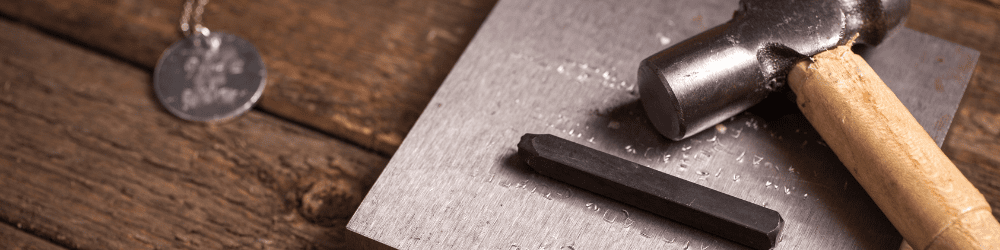
Hand stamping is a traditional jewelry-making technique where each letter, number, or symbol is individually hammered into metal by hand, one impression at a time. Unlike machine engraving, which is done by lasers or computerized tools, hand stamping relies on skill, precision, and experience. Every character is placed manually, making each piece truly one of a kind. This process creates jewelry that feels personal, organic, and full of character, perfect for telling meaningful stories through metal.
Frequently Asked Questions About Hand-Stamped Jewelry
1. Can You Create Custom Images and Fonts?
I only offer customization of my existing cuff designs.
I only create pieces using my current fonts FONTS , and IMAGES (from my stamp library only - I CANNOT create custom images). Fonts and images cannot be made larger or smaller
2. Can you stamp text on BOTH sides of a cuff?
In some cases, text can be stamped on both the outside and inside of a cuff. Whether this is possible depends on the cuff design, the amount of text, and where the stamping will be placed.
Text on the outside and inside cannot occupy the same area of the cuff. Because each character is individually hand stamped into the metal, the stamping creates an impression that affects both sides. Inside text must be positioned in an area that does not overlap with the text or design stamped on the outside.
For this reason, not every combination of inside and outside text will work. Shorter text and simple designs offer the most flexibility.
I am not able to stamp on the back of any of my pendants
3. What are the benefits of hand stamping?
Each piece is truly unique.
Because every letter is placed by hand, no two pieces are ever exactly the same. Slight variations in spacing, depth,
and alignment make your jewelry one of a kind.
It creates a handcrafted, artisan look.
Hand stamping gives jewelry an organic, slightly imperfect beauty that reflects real craftsmanship rather than mass
production.
It adds emotional value.
Knowing that your piece was made slowly and intentionally makes it more meaningful, especially for gifts, memorials,
or milestone jewelry.
It allows for customization.
Names, dates, quotes, coordinates, and symbols can be combined in endless ways to create a personal story.
It supports traditional metalworking skills.
Hand stamping keeps classic jewelry-making techniques alive and celebrates true artisan work.
4. How is hand stamping different from engraving?
Hand stamping uses steel stamps and a hammer to physically press each character into the metal. Engraving is usually
done by machines or lasers that carve into the surface.
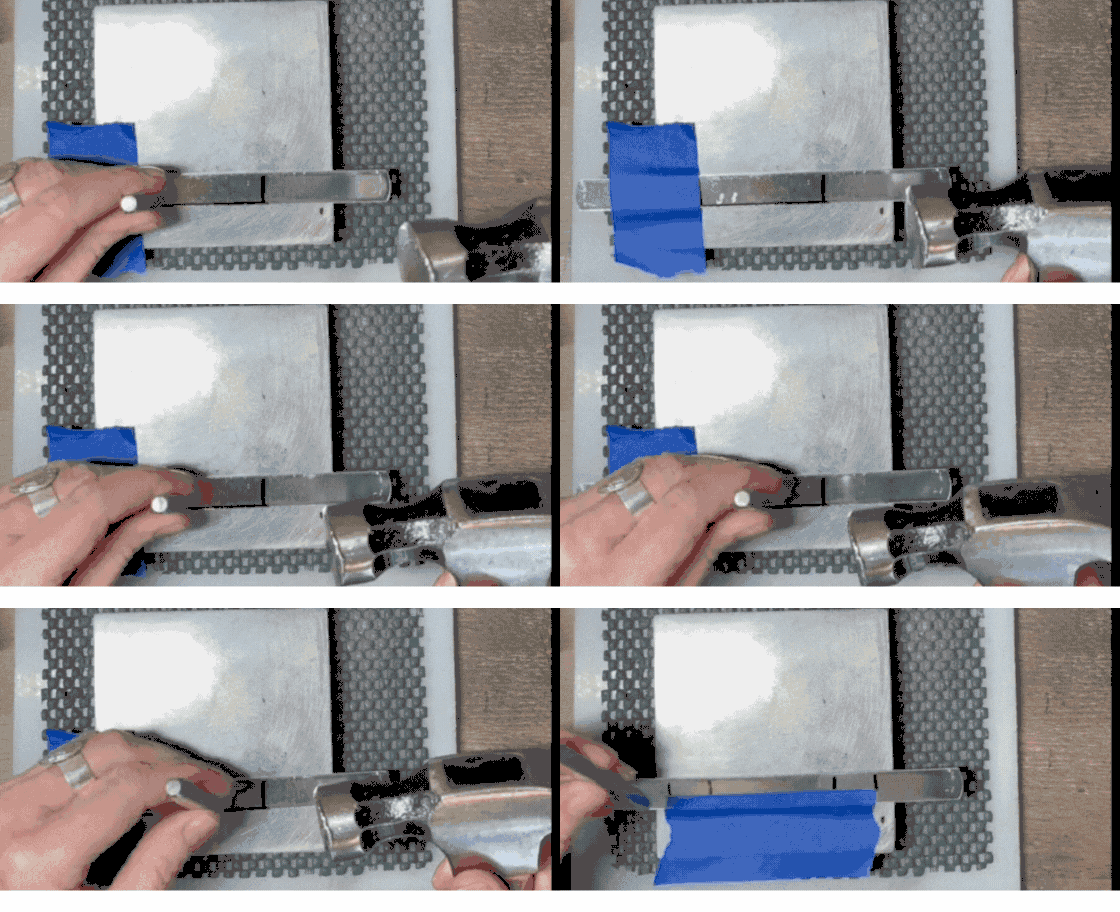
With hand stamping:
- Letters are impressed, not etched
- Depth can vary slightly
- Each piece has natural character
- The process is slower and more hands-on
Engraving produces perfectly uniform text, while hand stamping creates a more organic, handmade feel.
5. Can you stamp text on BOTH sides of a cuff?
In some cases, text can be placed on both the outside and inside of a cuff, but it depends on the design and the amount of text. Please reach out before ordering so I can confirm what will work best for your piece.
Because each letter and image is hand-stamped with force, stamping on one side affects the opposite side. When both sides are stamped, this pressure can cause earlier text or images to soften, distort, or lose sharpness. Double-sided stamping also significantly limits how much text can be added while still maintaining clear, beautiful results.
I am not able to stamp on the back of any of my pendants
6. What metals can be hand stamped?
Hand stamping works best on softer or medium-hard metals, such as:
- Sterling silver
- Aluminum
- Copper
- Brass
- Pewter
- Gold-filled (with care and experience)
Harder metals, like stainless steel, require special tools and techniques and are more challenging to stamp by hand.
7. Are hand-stamped letters always perfectly straight?
No, and that is part of the charm.
Because each character is placed individually, there may be slight variations in:
- Spacing
- Alignment
- Depth
- Angle
These small differences are what give hand-stamped jewelry its handmade personality. If you prefer perfectly uniform text, machine engraving may be a better fit.
8. How durable is hand-stamped jewelry?
Hand-stamped impressions are permanent because they are physically pressed into the metal. They will not rub off or disappear.
However, darkening or oxidizing used to highlight letters may fade over time, especially with frequent hand washing, lotions, and daily wear. This can usually be refreshed at home or professionally.
9. What are the limitations of hand stamping?
While hand stamping is beautiful, it does come with some natural limitations.
- Limited space
Each piece has a maximum number of characters it can hold based on size, width, and font. - No custom fonts, images or logos
Stamp artists can only use the stamps they own. Custom logos, handwriting, or unique fonts are not possible. - Letters and images cannot be scaled
Because each letter and image is individually hand-stamped with steel tools, the size of the stamps (letters & images) cannot be made larger or smaller. - Risk of imperfections
Since the process is done by hand, mistakes cannot always be erased. This requires careful planning and experience. - Material constraints
Some metals are too hard, thin, or delicate to stamp safely without damage. - Time intensive
Hand stamping takes longer than machine engraving, especially for longer texts or multiple lines.
10. Can hand-stamped jewelry be restamped later?
In most cases, no.
Once a piece is stamped, adding new text later can be risky. Re-stamping may distort existing letters, weaken the metal, or affect the shape of the jewelry. That is why it is important to carefully review your personalization before ordering.
11. Why does hand-stamped jewelry sometimes cost more?
You are paying for:
- Skilled labor
- Time and precision
- Years of experience
- One-on-one customization
- Small-batch production
Each piece is made individually, not in bulk. This makes hand-stamped jewelry more labor-intensive and more personal than mass-produced items.
12. Who is hand-stamped jewelry best for?
Hand-stamped jewelry is ideal for people who value:
- Meaningful personalization
- Handmade craftsmanship
- One-of-a-kind pieces
- Story-driven jewelry
- Artisan-made gifts
It is especially popular for memorials, anniversaries, graduations, pet jewelry, medical alerts, and inspirational pieces.
13. Is hand-stamped jewelry right for me?
Hand-stamped jewelry is perfect if you love pieces that feel human, heartfelt, and intentionally made.
You may not love it if you want:
- Perfectly uniform text
- Highly detailed logos
- Long paragraphs of text
- Machine-precision results
If you appreciate small variations and handmade beauty, hand stamping is likely a great fit.
Final Thoughts
Hand stamping is more than a technique. It is a slow, thoughtful process that turns simple metal into wearable stories. Every letter is placed with care. Every piece carries the mark of the maker. And every finished design reflects both craftsmanship and meaning.
When you choose hand-stamped jewelry, you are not just buying an accessory. You are investing in something personal, timeless, and made just for you.
